Surprising fact: Over 70% of new U.S. broadband builds now use fiber networks that require precise manufacturing to achieve performance targets. Shanghai Weiye OFC Equipment oversees end-to-end FTTH manufacturing, from choosing brand fibers like Fujikura or Corning SMF-28e to final test reports that support 100% quality assurance.
Our drop designs support aerial, underground, and direct-buried installation, with LSZH, PVC, and PE jacket options and configurations from 1–4 cores. Available options include OS1/OS2, OM2–OM4, G.652D, G.657 variants, Pantone-matched sheath colors, and custom logo printing.
SZ Stranding Line

Fiber Secondary Coating Line

Fiber Coloring Machine
Precision machines and specialized equipment keep line speed stable and repeatability strong. Standard production windows are typically 4–5 days for orders below 100 km and 7–10 days below 500 km, supported by a 1 km MOQ and free replacement warranty for confirmed quality issues.
Read on to see how materials, testing, and support come together to lower lifecycle cost and match the right product to your network system.
Main Takeaways
- Shanghai Weiye OFC Equipment delivers end-to-end manufacturing and lab testing for U.S. deployments.
- Different jacket materials and fiber grades help match diverse installation conditions.
- Precision lines and machines maintain consistent quality and stable optical performance.
- Fast lead times, low MOQ, and brand fiber options simplify procurement planning.
- Full test documentation and warranty support help verify reliability and satisfy QA requirements.
Specialized FTTH Manufacturing By Shanghai Weiye OFC Equipment
When project timelines and performance matter, Shanghai Weiye OFC Equipment manufactures tailored drop solutions with full test documentation.
Shanghai Weiye OFC Equipment works as a focused supplier and manufacturer, combining specialized equipment with strict material control. We offer customized service and products for residential and MDU rollouts. Every order includes 100% quality assurance and complete test reports.
Our lab conducts high-temperature, salt spray, and vibration tests to verify durability. Jacket options include LSZH, PVC, and PE. Designs cover bow-type flat and self-supporting styles and use brand fibers such as Fujikura and Corning SMF-28e.
- Documented line control and production checks for auditable shipments.
- Engineering support for specs, trials, and ramp to volume.
- Updated fixtures and calibrated processes reduce variation so each cable can meet operator standards.
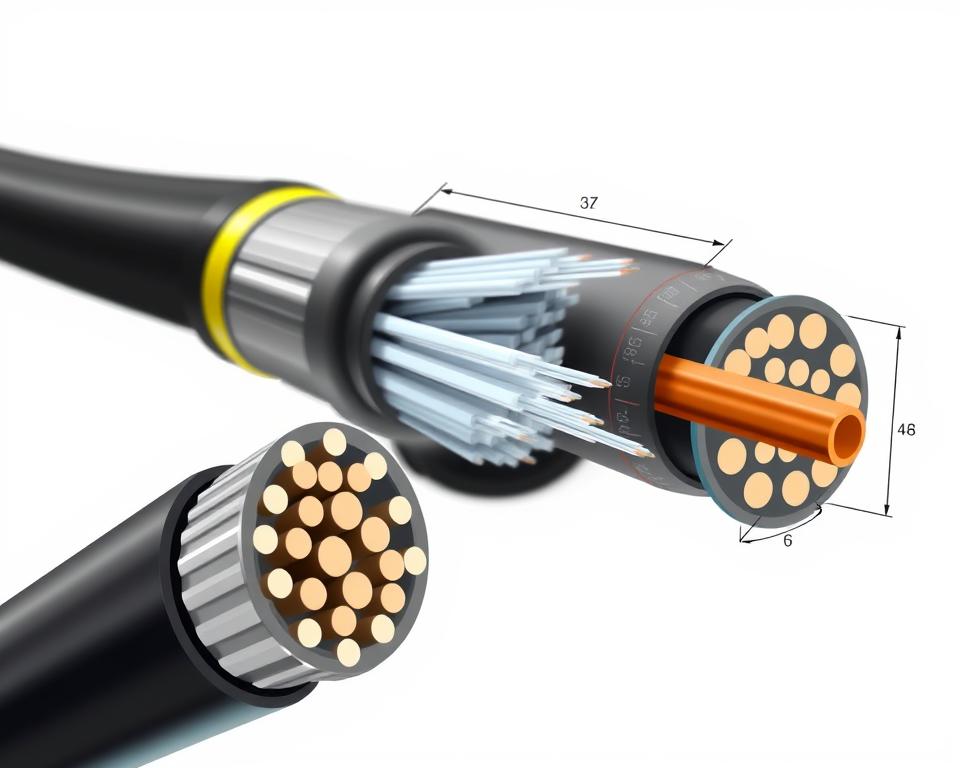
FTTH Cable Manufacturing
Shanghai Weiye OFC Equipment aligns each manufacturing step with network specifications while combining brand fiber options and strict testing routines.
Selecting Optical Fiber And Brand Options
Optical fiber is chosen according to bend radius, attenuation, and deployment type. Available options include OS1, OS2, OM2–OM4, ITU-T G.652D, and G.657.A1/A2. Brand fiber choices, including Fujikura and Corning SMF-28e, are available to satisfy procurement requirements.
Strength Member Integration
Strength members use dielectric FRP or metallic steel wire. FRP is ideal where non-conductive runs are required. Steel wire provides extra tensile strength for longer aerial spans and bonding or grounding requirements.
Controlled Jacket Extrusion
Jacket materials include LSZH for indoor flame safety, PVC for flexible handling, and PE for outdoor UV and moisture protection. Tight process control of temperature and capstan ratios stabilizes line speed and dimensional tolerances.
| Cable Component | FRP Strength Member | Metallic steel wire |
|---|---|---|
| Application | Non-metallic installations | Aerial spans, high tensile |
| Main benefit | Lightweight, inert | High strength |
| Field note | Simpler field terminations | Requires grounding |
Inline Testing And Final Inspection
Geometry and concentricity checks are performed inline during manufacturing. Final optical testing confirms attenuation and return loss. Every order ships with a complete test report plus lab results from high-temperature, salt-spray, and vibration trials to support drop termination and field-use requirements.
Lead times are typically 4–5 days for orders below 100 km and 7–10 days for orders below 500 km. Material lot tracking and first-article approvals help support traceability and compliance for U.S. projects.
FTTH Drop Cable Types, Designs, And Structures
Shanghai Weiye OFC Equipment manufactures a compact portfolio of drop designs that suit both tight indoor routes and exposed aerial spans. Every option combines tested materials with geometry designed for field termination and stable optical performance.
Bow-Type Flat Cable For Indoor Distribution
The bow-type flat drop cable reduces footprint for risers and conduit. It keeps bend loss low for easy routing in hallways and MDUs.
Self-Supporting FTTH Designs For Aerial Runs
Self-supporting ftth drop designs include a messenger element to carry tensile loads. Dielectric FRP is available for non-conductive routes, while steel wire is suitable when bonding and additional tensile strength are needed.
Core Layouts And Strength Member Options
Dielectric and metallic strength member configurations are available to meet safety and EMI requirements. Center loose tube and unitube flat designs balance crush resistance with fiber access for faster termination.
Indoor/Outdoor Jackets
Jacket choices include LSZH for flame-retardant, low-smoke indoor use and PE for outdoor UV and moisture resilience. Each family is validated for mechanical and optical quality before shipment.
| Structure | Best use | Strength member | Sheath |
|---|---|---|---|
| Flat bow-type | Indoor distribution and MDUs | Dielectric FRP | LSZH |
| Aerial self-supporting | Aerial spans | Metallic steel or dielectric FRP | UV-resistant PE |
| Center-tube design | Larger fiber-count needs | FRP | LSZH/PE |
| Flat unitube | Low-count, easy strip | FRP or steel | Indoor/outdoor jacket |
Production Line Equipment For Quality And Speed
Automation and sensor-driven feedback at Shanghai Weiye OFC Equipment cut manual handling and improve throughput for patch cord prep.
The production line uses automated cutting and stripping machines for drop patch cords, helping increase throughput and reduce labor variation.
The CLX-BPO2 auto-stripping machine runs under PLC and photoelectric control. With a cycle time of about 1.5 seconds, it supports real-world speeds near 20 terminal operations per minute.
Automated Cutting And Stripping For Drop Cable Patch Cords
The equipment can strip LSZH and PVC jackets while trimming FRP or steel strength members to accurate stub lengths. Cylinder-driven actuation provides fast, repeatable movement with reduced downtime.
PLC/Photoelectric Control For Precision And Repeatability
PLC logic combined with photoelectric sensors provides accurate positioning and closed-loop control. Inline checks support control charts, helping operators correct process trends before defects increase.
| Feature | Capability | Benefit |
|---|---|---|
| CLX-BPO2 unit | About 1.5s cycle with auto-strip | High terminal-prep throughput |
| Drive system | Cylinder-driven | High speed and reliability |
| Supported materials | LSZH/PVC; FRP/steel | Accurate stubs, clean terminations |
| Quality control | PLC/photoelectric control with checks | Stable quality with fewer corrections |
- Automated waste ejection and ergonomic loading keep the line clean.
- Control plans record calibration intervals and key operating parameters.
- Machines, fixtures, and trained staff work together to meet FTTH volume goals while preserving accuracy.
CLX-BPO2 Auto-Stripping Machine Capabilities In Our Line
The CLX-BPO2 adds industrial stripping and trimming capability to the line, reducing cycle time while keeping preparation consistent.
Shanghai Weiye OFC Equipment uses the CLX-BPO2 to raise output and standardize terminal quality. The unit runs at an approximate cycle time of 1.5 seconds, yielding about 20 terminal preparations per minute in production.
PLC and photoelectric controls provide accurate detection and repeatable machine movement. That control helps keep strip lengths and reserved strength stubs within tight tolerances.
Throughput And Cycle Time
Normal operating speed is about 1.5 seconds per cycle. That speed translates into steady throughput during continuous production.
Supported Jacket And Reserved Strength Lengths
The CLX-BPO2 strips LSZH and PVC jackets with an adjustable jacket strip length from 17.5 to 35.0 mm. Reserved strength member stubs are set between 7.0 and 11.0 mm to match common termination hardware.
Handling FRP And Steel Wire Strength Members
The machine cuts FRP and steel wire strength elements cleanly while helping protect nearby fibers. Customized cutters are available for nonstandard sizes to preserve precision.
- Automatic waste ejection and sensor-triggered start reduce idle time.
- A compact size of L40 × W18 × H18 cm, 110–220V power, 50W rating, and 11 kg weight make workcell integration easier.
- Cylinder-driven motion and PLC/photoelectric control improve line reliability and lower maintenance interruptions.
| Machine spec | Setting | Operational benefit |
|---|---|---|
| Cycle speed | ~1.5 s (~20/min) | Strong throughput for volume production |
| Adjustable strip length (A) | Adjustable 17.5–35.0 mm | Supports common connector prep |
| Strength stub (B) | 7.0–11.0 mm | Supports strength and termination requirements |
| Electrical and size data | Compact 110–220V, 50W machine | Easy integration into existing equipment |
Using this machine, Shanghai Weiye OFC Equipment standardizes prep so field teams receive drop parts ready for quick installation. The CLX-BPO2 helps our production lines meet volume goals without sacrificing quality.
Tailored Specifications For Your FTTH System
Shanghai Weiye OFC Equipment customizes each build to match network requirements and make field rollout easier. We pair concise options with predictable manufacturing windows so your teams receive ready-to-install products.
Cable Core Counts, Fiber Types, And Colors
Choose 1–4 core designs with single-mode or multimode fiber. Options include OS1, OS2, OM2–OM4, G.652D, and G.657 variants to suit your optics and connector plans.
We match sheath colors to Pantone codes for fast field ID and consistent asset tagging.
Jacket Materials, Print Legends, And Branding
Choose LSZH, PVC, or PE jackets according to the installation route and safety requirements. Custom print legends and logos help support inventory control and warranty tracking.
Length Choices, Packaging, And Custom Structures
Standard lengths include 1 km, 2 km, and 4 km, with customized reels and packaging for storage and handling needs. Bow-type flat or self-supporting designs can be paired with steel wire or FRP strength members to match span, bonding, and isolation requirements.
| Option | Common choice | Benefit |
|---|---|---|
| Put-up length | Standard 1, 2, or 4 km reels | Less staging, easier reels |
| Outer jacket | Indoor and outdoor jacket options | Indoor/outdoor compatibility |
| Cable structure | Bow-type / Self-supporting | Flexible installation planning |
As a supplier, Shanghai Weiye coordinates runs to your schedule and delivers documentation that lists final specifications for straightforward QA on site.
Testing, Documentation, And Quality Assurance
Shanghai Weiye OFC Equipment embeds quality checkpoints across the production line so every item ships with recorded acceptance data.
High-Temperature, Salt Spray, And Vibration Laboratory Testing
Our lab runs high-temperature exposure, salt spray corrosion, and vibration tests to qualify materials and assemblies. These tests recreate field stresses for indoor and outdoor use.
Complete Test Reports For Every Cable
Each fiber optic cable ships with a complete test report recording attenuation, return loss, and geometry where relevant. Final inspection checkpoints prevent nonconforming items from leaving the factory.
Traceability Records And Compliance Support
Batch records connect test data with reels and serial numbers, making audits and warranty claims easier to verify. Documentation can follow common customer templates to speed approval and inbound inspection.
- Line checks and final inspection prevent field failures and lower warranty events.
- QA packages include specification confirmation and formatted test data for faster review.
- Continuous test trends inform preventive maintenance and improve long-term reliability.
| Inspection test | Reason | Verified outcome |
|---|---|---|
| Heat exposure | Heat resistance | Validated heat endurance |
| Corrosion exposure | Corrosion resistance | Verified outdoor readiness |
| Vibration testing | Mechanical durability | Lower failure risk |
Pricing And Cost Drivers For FTTH Drop Cable
Budgeting for a drop run starts with fiber and jacket choices and is refined by volume and customization.
Typical prices range broadly—from about $30 to $1,000 per unit—based on fiber grade (G.652/G.657/OM2–OM4), jacket chemistry (LSZH, PVC, PE), length, and structural design.
Material Choices, Fiber Grade, Jacket Type, And Structure
Main cost drivers include fiber optic grade, jacket material, and the cable structure selected for deployment.
Self-supporting designs and steel strength elements add to material and labor input. Custom colors, logos, and print legends add setup time and influence price for short runs.
How Order Length, Volume, And Customization Affect Price
Longer reels and higher volume orders lower unit cost. Smaller quantities often involve setup fees and higher per-unit pricing.
- Changeovers and special cutters increase lead time and add to cost.
- Clear RFQs and production scheduling help Shanghai Weiye OFC Equipment match price quotes with delivery windows.
- Framework agreements and indexed pricing stabilize budgets across phases.
| Pricing factor | Price impact | Recommendation |
|---|---|---|
| Fiber specification | Major impact | Match performance to budget |
| Jacket material | Material-dependent impact | Evaluate LSZH, PVC, and PE by route |
| Order volume and length | Large impact | Combine orders where practical |
U.S. Lead Times, MOQ, And Delivery
Shanghai Weiye OFC Equipment makes lead times and logistics clear so planners can align crews and sites. Predictable delivery windows help reduce downtime and control costs during active rollouts.
Production Windows And Capacity Planning
Typical production windows run 4–5 days for orders under 100 km and 7–10 days for orders under 500 km. Line capacity is scheduled around rollout milestones to support on-time delivery.
The service team issues production updates and tracking so installation teams know when reels arrive. For urgent schedules, contingency capacity can help accelerate critical-path orders.
Minimum Order Quantity And Why It Matters
The MOQ is 1 km. This accounts for setup needs, including wire and jacket die adjustments, that use start-up material and create scrap.
Length and staging plans are reviewed to choose reel sizes that reduce waste and handling. Batch releases can balance inventory holding with frequent, smaller deliveries to job sites.
Installation Preparation And Application Scenarios
Project site conditions determine whether self-supporting aerial span, duct pull, or direct-buried installation is the right fit.
Aerial, Duct, And Direct-Buried Deployment Considerations
For aerial runs, Shanghai Weiye OFC Equipment recommends self-supporting designs with correct strength members to control sag and tension for long-term reliability.
Duct installations work best with low-friction jackets and crush-resistant structures that help protect fibers during pulling. PE jackets are commonly used for underground and buried routes where moisture resistance is important.
Direct-buried designs require proper depth control per local codes and moisture-resistant jackets to protect the optic core over time.
Indoor Riser And Plenum Distribution With ONT Termination
Indoor riser and plenum routes favor LSZH jackets to meet flame and smoke rules. Flat drop cable forms strip cleanly and provide controlled strength stubs for fast ONT termination.
Selection of steel or FRP dielectric strength members is guided by bonding requirements, lightning exposure, and hardware compatibility. Standardized prep from the production line shortens install time and reduces scrap.
| Installation scenario | Important feature | Field note |
|---|---|---|
| Aerial | Messenger support with steel or FRP | Check tension and messenger hardware |
| Conduit route | Pull-friendly jacket and crush protection | Use correct pull tape and lubricant |
| Buried route | Outdoor PE moisture protection | Observe burial depth and warning tape rules |
| Indoor | LSZH jacket, tight bend support | Protect bend radius through penetrations |
This approach supports consistent installation across indoor and outdoor transitions. The result is fewer callbacks, faster activations, and more dependable field performance for the system.
End-To-End Support And After-Sales Assistance
The team coordinates testing, line scheduling, and installation guidance to reduce surprises during deployment.
Shanghai Weiye OFC Equipment provides engineering support from early requirements through approved drawings and pre-production builds. We deliver documentation templates and clear installation notes so field crews work from the same plan.
After-sales service covers rapid response, root-cause analysis, and corrective actions. All products ship with full test reports and traceability to help QA acceptance.
- Round-the-clock availability supports status updates and technical guidance.
- Warranty support includes free replacement when confirmed quality problems occur.
- Line schedule coordination helps handle urgent changes and acceleration requests.
- Configuration control so shipped items match agreed requirements every time.
| Support area | Service provided | Benefit |
|---|---|---|
| Spec engineering | Drawing review and trial production | Fewer field issues |
| Quality testing | Lab trials & 100% test reports | Documented product quality |
| Post-sale support | Fast replacement and root-cause review | Minimized downtime |
Conclusion
Choose Shanghai Weiye OFC Equipment for tailored drop builds, short lead times, and traceable quality records.
We deliver customized ftth drop solutions that pair material choices with validated manufacturing and lab testing. Every reel ships with a 100% test report and documented trials to support field acceptance in the United States.
A strong production line, including CLX-BPO2-enabled preparation machines, reduces variation and improves turnaround. Our equipment standardizes strip lengths and strength stubs so installers receive consistent results during turn-up.
From fiber selection through jacket, printing, and packaging, we balance design and cost to support longer service life. Dedicated support guides scheduling, logistics, and after-sales care so your deployment stays on plan.
Contact Shanghai Weiye OFC Equipment to coordinate specifications, timeline, and volume. Every fiber optic and optic cable shipment is backed by lab validation and responsive service.