Accessory dwelling units are helping homeowners discover new ways to generate rental income while creating flexible living space. ADU contractors and granny flat builders transform unused yards into rental properties, guest suites, or homes for aging in place. Renovate Builders, located at 3612 Madison Ave #33, North Highlands, CA 95660, provides a complete design-build service. They handle everything from design to construction, ensuring a seamless process.
Get Started With an ADU Project in Maple Valley
Homeowners can contact Renovate Builders at (916) 970-0047 or [email protected]. Their service area is broad and includes ZIP codes such as 95219, 95212, 95210, 95211, 95209, 95207, 95203, 95205, 95204, 95206, and 95202. They offer an extensive catalog of more than 30 ADU models, ranging from the compact S-260 to the larger XL-1200, so different project sizes can be matched more easily.
Renovate Builders specializes in secondary units and emphasizes transparent pricing, transparent scheduling, and licensed, bonded crews. They back their work with warranties covering both labor and materials. Digital tools and an in-house showroom help simplify decisions while keeping clients informed throughout the job. With over 826 aggregate ratings from Google, Facebook, and Yelp, they remain notable among backyard cottage builders and secondary unit experts.
Important Takeaways
- Accessory Dwelling Unit Builders turn unused space into rental housing or family living space.
- Greater Sacramento homeowners can use Renovate Builders for complete, end-to-end ADU services.
- Homeowners with local projects can reach Renovate Builders at (916) 970-0047 or [email protected].
- Available model options span from compact studios to multi-bedroom layouts of 1200+ sq ft.
- Transparent pricing, licensed crews, and warranties are key service standards.
Accessory Dwelling Unit Builders: Choosing The Right ADU Contractor Near You
Choosing the right team for an ADU project is critical for cost, schedule, and quality. A straightforward comparison process helps you evaluate firms by portfolio strength, contract clarity, and local permitting knowledge. This method is effective whether you’re looking for in-law unit contractors or larger ADU construction companies.
What To Look For In Accessory Dwelling Unit Builders
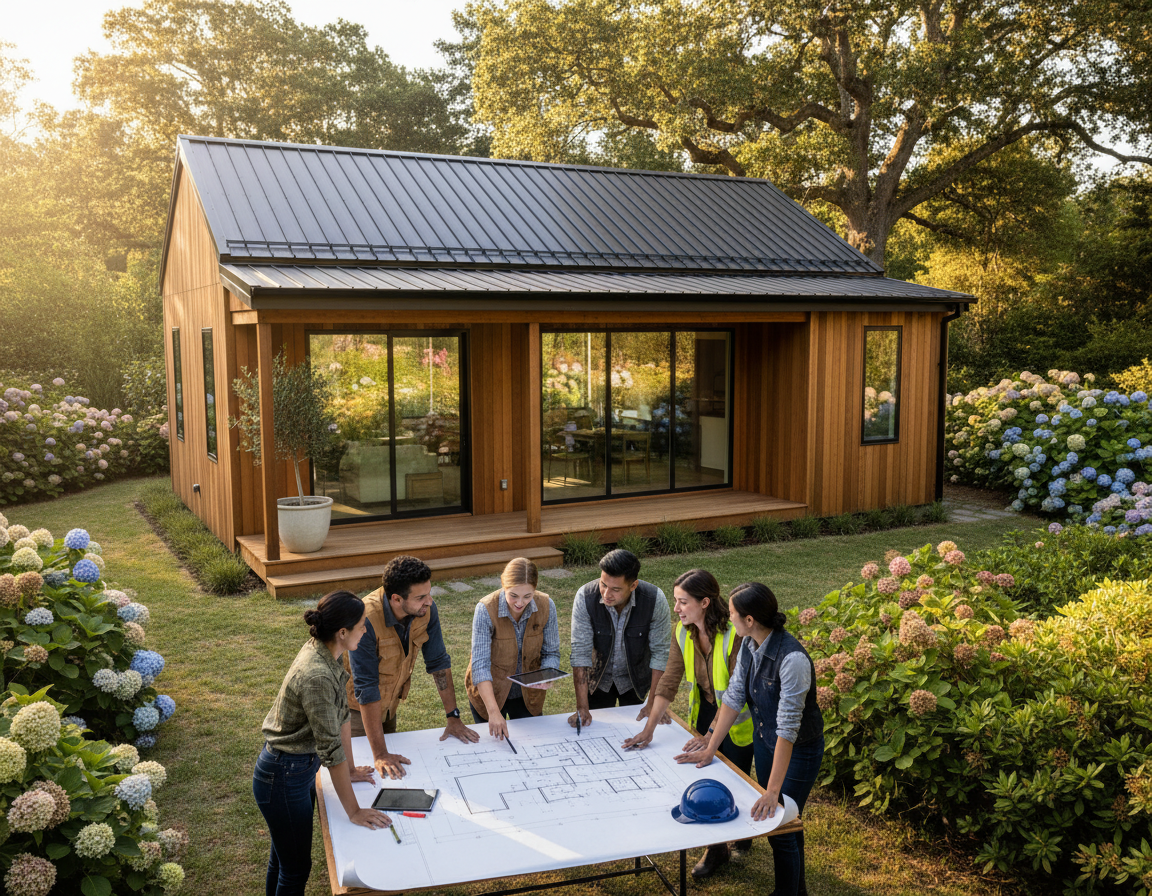
Start by reviewing proven portfolios and a clearly defined workflow that runs from feasibility through move-in. Look for companies offering turnkey design-build service along with a showroom or a catalog of pre-approved plans. Ask whether they build both prefab and stick-built ADUs and whether they use digital communication tools to manage projects.
Ask for completed-project examples and access to the company’s model library. A large library with many 2026 ADU models indicates design depth. An accessory dwelling unit builders checklist can help compare timelines, scope, and included services side by side.
What To Expect For Licensing, Insurance, And Warranties
Make sure the contractor is licensed and bonded through the California Contractors State License Board. Request proof of insurance along with written warranties covering labor and materials. Well-established firms may also list certifications or affiliations such as EPA training, BBB accreditation, NKBA, or NARI membership.
For example, a licensed contractor with a CSLB number and clear warranty documents reduces risk and supports permitting. Warranties and bonding should be treated as non-negotiable parts of any contract.
Local Experience And Familiarity With California Permitting (Example: Stockton, San Joaquin, Greater Sacramento)
Local permitting rules vary by city and county. To avoid delays, choose contractors who already have experience in Stockton, San Joaquin, and Greater Sacramento. Local firms know size minimums, utility rules, and specific plan-check expectations.
Contractors who serve ZIP codes in those areas can often give accurate feasibility feedback on site access, utilities, fire clearance, and maximum build sizes. Some companies specialize in county workflows and can streamline approvals.
Transparent Pricing And Clear Estimates
Whenever possible, request permit-ready plans and fixed-price proposals. Clear line-item estimates reduce surprises and help you compare bids from different ADU construction companies. Look for firms that offer a feasibility snapshot or similar analysis that checks the key variables before quoting.
Detailed schedules and milestone payments demonstrate transparency. A fixed-price offer that includes permit fees and known allowances gives better cost control than vague hourly estimates.
Customer Reviews And Ratings — How Renovate Builders Compares
Platform ratings and aggregated review totals can be useful when comparing company reputations. Check Google, Yelp, and Facebook ratings and read recent project notes. Large review volumes across platforms for Renovate Builders and A+ Construction can help validate consistency.
Compare review totals and average ratings, plus the mix of projects described. SnapADU and similar local specialists often point to high rating averages plus concentrated regional experience, which can matter when local approvals are more complex.
Practical takeaways: run an accessory dwelling unit builders checklist, confirm licensing and warranties, verify local permitting experience, request clear estimates, and review platform ratings when choosing in-law unit contractors or additional dwelling constructers among ADU construction companies.
Top-Rated ADU Contractors And Trusted Local Specialists
Searching for trusted builders for a secondary unit can be overwhelming. This section highlights notable firms, regional examples, and practical selection tips. It helps you compare portfolios and choose a contractor that meets your needs.
Renovate Builders Overview And Contact Information
Renovate Builders, also known as A+ Construction & Remodeling / Renovate Builders, provides complete ADU services. This includes design, permits, and construction. They provide showroom visits and virtual consultations to ease planning. They can be reached at (916) 970-0047, [email protected], or 3612 Madison Ave #33, North Highlands, CA 95660. Their service area includes Greater Sacramento along with many Stockton and San Joaquin ZIP codes.
Regional Examples From Greater Sacramento, Stockton, San Joaquin, And San Diego ADU Builders
Renovate Builders brings extensive local zoning and permit-process experience in Greater Sacramento and Stockton. They handle detached, attached, junior, and conversion ADUs. Their local knowledge speeds up approvals and reduces surprises.
In San Diego County, SnapADU is known for detached ADUs. SnapADU has completed over 100 ADUs, offers fixed-price transparency, and has in-house permitting. They boast a high completion rate above 90%.
Why Choose A High-Review Family-Owned Local Contractor (Example Metrics)
Family-owned companies often bring deeper vendor relationships and more hands-on oversight. Renovate Builders has 826 total reviews across platforms, including 324 on Google, 143 on Facebook, and 102 on Yelp. Local reputation often leads to faster problem solving and cost savings.
When searching for ADU builders near you, prioritize firms with local references and steady review averages. Regional awards and clearly stated timelines can add useful validation.
Comparing Portfolios: Completed ADU Project Types And Sizes
Review completed projects to see which firms align with your project type. Renovate Builders offers models ranging from compact studios to larger XL units. Their portfolio includes a 390 sq ft studio with a covered porch, a 592 sq ft accessible ADU, 856 sq ft multi-use units, 1,077 sq ft two-story additions, and larger models reaching about 1,198–1,200 sq ft.
SnapADU’s portfolio includes ADUs over garages at 749 sq ft, a 980 sq ft Spanish-style unit, modern two-story 540 sq ft designs, and larger multi-bedroom ADUs up to 1,500 sq ft. Those examples are useful when comparing backyard cottage builders, granny flat builders, and other secondary unit builders.
A strong best practice is to request local galleries and references, ask about completion rates and average timelines, and confirm both warranty support and permit support. Use those metrics to compare top-rated ADU contractors against smaller local teams before choosing one.
What Leading Construction Companies And Contractors Offer For ADU Services
Leading ADU construction companies usually provide a full range of services. They guide homeowners from the initial idea to the final walk-through. Typical services include feasibility reviews, permit-ready plans, engineering, interior selections, construction management, and post-build support. Many firms also offer virtual consultations and showroom visits with designers to speed decision-making and reduce surprises.
Turnkey Design-Build Services: Design, Permits, And Construction
Design-build teams combine architects, permit specialists, and project managers under one contract. This approach reduces back-and-forth communication, shortens schedules, and often provides fixed pricing before permit submittal. To minimize delays, homeowners should request written timelines, digital updates, and permit-ready plans.
Prefab Vs. Stick-Built ADUs For Backyard Cottages And Granny Flats
Prefab ADU builders generally offer faster construction through factory-built modules. Because the modules arrive ready for installation, they are often a strong fit for flat, accessible lots and budget-sensitive projects. This can mean less on-site labor and a faster path to occupancy.
Stick-built ADU construction often gives homeowners more design flexibility. Builders can more easily match the main house, navigate tight parcels, and satisfy HOA requirements. Custom trim, unusual rooflines, and complex site work frequently make on-site framing the better choice.
Common ADU Types Built: Detached, Attached, Junior ADUs, And Garage Conversions
Contractors commonly build detached backyard cottages, attached additions, junior ADUs under 500 sq ft, and garage conversions. To save time and money, in-law unit contractors often recommend conversion-style projects. Each ADU type comes with different permit needs and site constraints that should be checked early.
Typical ADU Features And Model Sizes: Studio Through Multi-Bedroom (Examples Up To 1200+ Sq Ft)
Model catalogs can range from compact studios near 260–400 sq ft to larger plans above 1,200 sq ft that include two bedrooms, two bathrooms, and an office. Typical features may include full kitchens, laundry, accessible baths, walk-in closets, porches, and vaulted ceilings. To compare layout and pricing, builders may present plan options such as the S-260, M-600, L-1080, and XL-1200.
Financing And Warranties Offered By Reputable Builders (Lenders, Credit Union Partnerships, Workmanship And Structural Warranties)
Reputable additional dwelling constructers often work with lenders and credit unions to offer ADU financing paths. Those financing pathways can help preserve credit scores while providing needed loan documentation. Homeowners should request lender contacts and prequalification guidance as part of the proposal package.
Warranty coverage for workmanship and structure can vary by firm. Typical examples can include one year of workmanship coverage, two years for mechanical distribution systems, and ten years of structural coverage. Before signing, homeowners should insist on written warranty terms, contact names, and claim-response timelines.
Before committing, compare proposals from local in-law unit contractors and larger national teams. To improve the odds of staying on budget and on schedule, verify licensing, request permit-ready plans, and confirm financing partners.
ADU Building Process: Moving From Feasibility To Move-In
Begin with a thorough feasibility review. This step assesses zoning, lot coverage, setbacks, utilities, and fire access. Many builders use a checklist or a Feasibility SnapShot to review more than 75 variables. This process gives homeowners more realistic pricing and timeline expectations. Before proceeding, homeowners in Stockton and San Joaquin should confirm the local regulations that apply.
Once feasibility is confirmed, design development begins. Many companies provide access to in-house designers and an in-person showroom experience. They often also maintain a library of pre-approved floor plans. Permit-ready plans can accelerate reviews and help lower design costs. For properties with unusual constraints, custom designs are also available.
Permit submittal and plan check require detailed documentation and careful coordination with reviewing agencies. Reliable builders usually manage permit filing, respond to plan-check comments, and keep pricing fixed when possible. For California projects, local expertise is especially valuable when dealing with planning and building departments.
Clear scheduling and communication are central to effective construction management. Many leading teams rely on digital portals to provide real-time updates. That transparency helps homeowners track progress and can reduce unexpected issues during the ADU building process.
The final stages of the project typically include inspections, debris removal, and warranty activation. Builders complete punch-list items, coordinate final inspections, and clear the site before handoff. Post-build support commonly includes tiered warranty coverage and a clearly defined claims process.
Practical checklist for homeowners:
- Secure a professional ADU feasibility review early in the process.
- Request permit-ready plans along with a fixed-price proposal.
- Confirm that digital communication tools and schedule visibility are included.
- Verify debris removal, final inspection scope, and warranty terms in writing.
- Search for ADU contractors near me and interview backyard cottage builders to compare services more effectively.
Maximizing Value: Benefits, Use Cases, And Model Inspiration For ADUs
Accessory dwelling units (ADUs) offer meaningful benefits through added living space, higher property value, and rental income potential. Homeowners may use ADUs to house aging parents, adult children, or short-term rental guests. ADUs can also function as dedicated home offices. These practical uses give families flexibility, income opportunities, and a way to stay closer together.
For inspiration, homeowners can review project portfolios from Renovate Builders and SnapADU. These portfolios showcase compact studios from 260–400 sq ft, one-bedroom layouts from 300–600 sq ft, and two-bedroom units from 500–900+ sq ft. Larger models may reach 1,100–1,200+ sq ft and can include offices, multiple baths, or two-story carriage-house designs. Specialty options may also include accessible ADUs, poolside cottages, and porch-equipped retirement models, which can be useful when comparing granny flat builders and in-law unit contractors.
When moving through design and permitting, pre-approved floor plans can help speed the process. For more tailored outcomes, work with in-house designers on custom plans. It also helps to prioritize tenant-friendly layouts with features like full kitchens, laundry, walk-in closets, and porches. Features like those can strengthen rental appeal and income potential. Incorporating ADA-friendly features into backyard cottage ideas may attract longer-term renters and improve marketability.
To maximize financial value, begin with a budget that prioritizes feasibility and transparent estimates from reputable builders. For example, Renovate Builders offers turnkey services, financing partnerships, and warranties. Homeowners should align model size with the primary use case, verify zoning compliance, and select builders with proven track records and strong post-completion support.
Related: Local Kitchen Remodeling Contractor Maple Valley WA Tips: Service Checklist