“The first wealth is health.” — Ralph W. Emerson. Maintaining a safe home in Topanga starts underground. Septic Tank Pumping Topanga keeps systems working, helps avoid sewage backups, and helps protect Topanga’s canyon environment. Homeowners in Topanga Canyon, Malibu, and Greater Los Angeles count on local Topanga septic services for prompt, reliable septic service and practical septic maintenance Topanga that helps prevent expensive repairs.
Visit The Site Of Septic Tank Pumping Topanga
Topanga CA septic pumping isn’t just routine—it’s responsible care. Septic Services Of LA delivers fully licensed, bonded expertise and certified inspections to every job.
Key Takeaways
- Regular Septic Tank Pumping Topanga reduces the risk of backups and drain field damage.
- Local Topanga septic services pair local knowledge with certified inspection standards.
- Topanga CA septic pumping supports eco-conscious septic maintenance Topanga.
- Reliable septic service is available from licensed, bonded experts.
- Contact Septic Services of LA by email or phone for timely, expert care.
Why Regular Septic Tank Pumping Matters In Topanga
Routine septic maintenance in Topanga keeps plumbing systems functioning smoothly and safeguards sensitive canyon soils. Wastewater enters the tank where solids drop, liquids form a middle layer, and scum and grease rise. The clarified liquid leaves the tank and moves into the soil, where percolation and microbes finish treatment.
How septic systems work in canyon and coastal soil conditions
Topanga soils range from sandy coastal loams to heavier canyon clays. Those differences change percolation rates and how the drain field handles effluent. When a septic system Topanga soil interaction is balanced, native microbes break down effluent and water moves evenly through the drain field.
Risks of neglect: backups, drain field damage, costly repairs
If sludge and scum are not removed, they can clog inlet and outlet baffles. That leads to slow drains, sewage backups, and waterlogged drain fields. Failed percolation lets untreated effluent reach native soils, increasing contamination and making repairs expensive. Good drain field protection Topanga starts with timely tank care to avoid replacement-level failures.
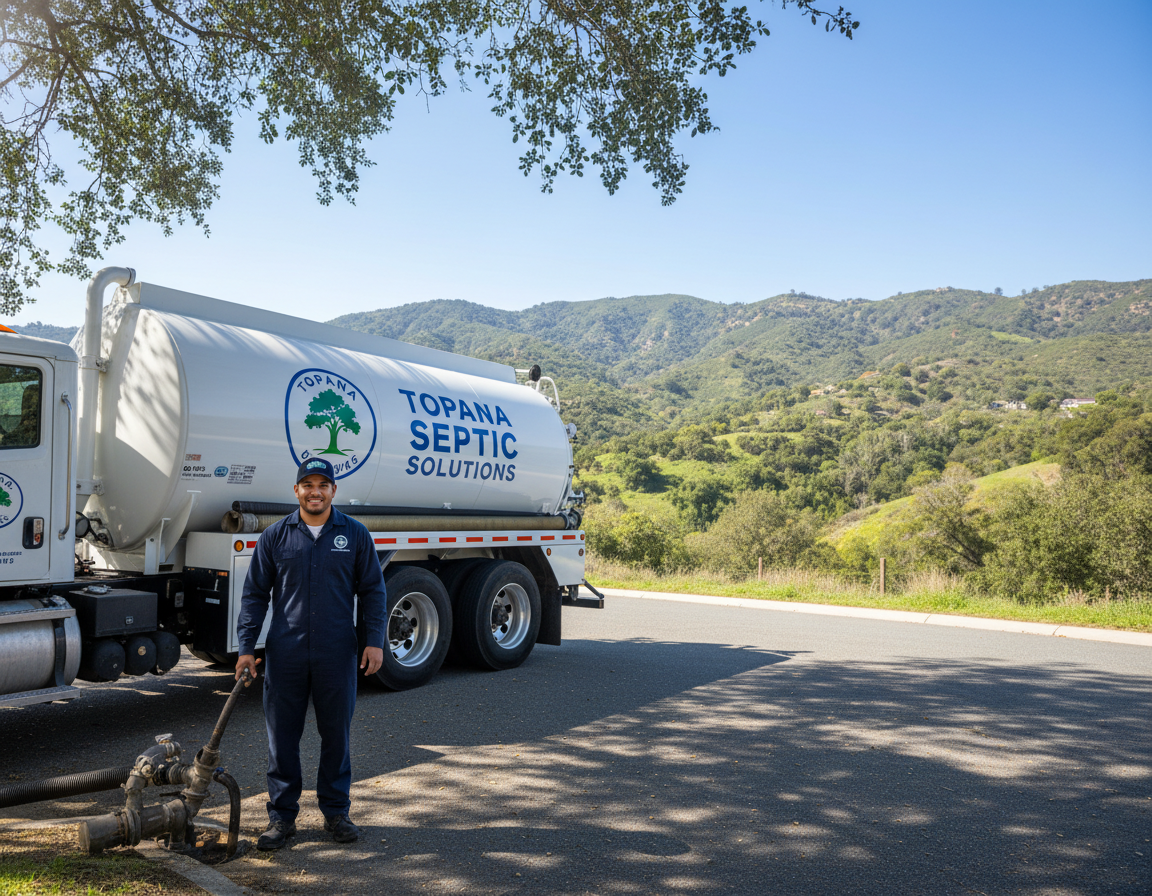
Recommended pumping frequency for Topanga households
Septic pumping frequency depends on tank size, household use, and system condition. A common guideline is every 3 to 5 years. Homes with large families, garbage disposals, or older systems may need service more often. If a system has not been pumped for more than five years, a full septic cleaning and inspection are prudent.
Regular inspections and a maintenance plan reduce unexpected costs. Annual checks help catch issues before they harm the drain field. Smart septic maintenance Topanga habits extend system life and preserve local waterways and soils.
Septic Tank Pumping Topanga Services
Dependable septic pumping service in Topanga offers homeowners a clear roadmap for maintaining tank health. A skilled crew will arrive, locate the tank, and perform a pre-service inspection. They open access ports, use vacuum trucks to remove the bulk of sludge and scum, check baffles and tank condition, then present a service report with recommendations.
What you can expect during a professional septic pumping visit starts with safety and ends with documentation. Technicians follow local codes, test risers and lids, and look for signs of structural issues. Notes on effluent level and remaining solids help you track when the next service is due. Many crews can switch to emergency modes when needed.
Signs your tank needs immediate attention include slow drains, persistent sewer odors, and toilets that gurgle or back up. Visible sewage, wet or saturated ground above the drain field, or no service records for more than three-to-five years are red flags. Fast service avoids drain-field damage and costly repairs.
A clear comparison of septic cleaning vs pumping helps homeowners choose the right plan. Routine pumping removes most solids to create space and reduce clog risk. Full septic cleaning goes deeper, removing compacted sludge and adherent solids to restore performance after long neglect.
| Service Type | Primary Use | What It Takes Out | When It’s Recommended | Expected Outcome |
|---|---|---|---|---|
| Septic pumping service | Routine maintenance | The bulk of loose sludge and scum | Every 3–5 years based on usage | Helps prevent backups and extends tank life |
| Full septic cleaning | Restoration after long intervals | Compacted sludge, adherent solids | After 5+ years without service or poor performance | Restores performance and helps delay replacement |
| Urgent pumping | Urgent response to backups | Rapid removal of accumulated solids and effluent | When backups are active, odors are severe, or fields are saturated | Quick relief, reduces environmental risk |
Local providers like Rooter Man and Septic Services of LA can deliver emergency septic pumping Topanga for urgent needs. Quick arrival limits property damage and health risk. Ask providers for documented inspection notes so you can compare future visits and track septic system health.
Scheduling routine professional septic pumping keeps systems steady and lowers costly repair risk. When older tanks show heavy buildup, combine standard pumping with periodic full cleaning to maintain peak performance.
About Septic Services Of LA: Local Expertise You Can Trust
Septic Services Of LA Topanga operates across Topanga Canyon, Malibu, and Greater Los Angeles. The team offers pumping, inspections, repairs, installations, maintenance, and remediation with a focus on minimal environmental impact and reliable results.
Clients benefit from strong credentials and a readiness to respond to underground wastewater issues. The company blends local knowledge with modern equipment to protect sensitive canyon soils and keep systems working well.
Company credentials: Licensed & Bonded CSLB #1019132 C-42 Sanitation
Septic Services Of LA Topanga is a licensed and bonded contractor under the California State License Board, CSLB #1019132, holding the C-42 Sanitation classification. This license confirms legal compliance for sanitation and septic work across the region.
Certifications And Standards: NAWT / COWA Certified Ops & Inspections
The crew provides certified NAWT septic service and follows COWA inspection protocols. Certification from the National Association of Wastewater Technicians signals adherence to industry standards for operations and inspections.
Contact Info And Availability: Office, Mobile, And Email
For scheduling or emergency response, contact the office at 310.455.7448 or mobile at 310.903.2659. Email inquiries go to [email protected]. The company markets itself as a responsive, trusted, and licensed septic contractor Topanga residents can rely on.
Eco-Friendly Practices And Soil Protection In Topanga Service
Topanga’s steep canyons and coastal soils need careful handling when septic systems are serviced. Local companies focus on methods that reduce disturbance, keep waste contained, and protect native vegetation. Those approaches support long-term site health and water quality in the canyon.
Minimizing environmental impact during pumping and service
Technicians use targeted access and minimal excavation to avoid uprooting roots or exposing soil to erosion. Containment measures prevent spills during transfer and ensure pumped waste goes to licensed treatment facilities. These precautions keep contaminants out of streams and groundwater.
How proper pumping protects sensitive Topanga canyon ecosystems
Regular pumping keeps solids from reaching the drain field, which lowers the chance of effluent surfacing and harming soils. By preventing clogs and overloading, soil protection septic practices reduce runoff and preserve native plant habitats. This preventative care matters for properties near creeks and slopes.
Using advanced equipment to reduce surface disturbance
Modern vacuum trucks and camera inspection tools limit digging and speed diagnostics. Remediation systems such as SludgeHammer® allow repair without large-scale replacement. Choosing low-impact septic services Topanga means using tools that restore function while maintaining soil structure.
| Method | Benefit | Typical Tools |
|---|---|---|
| Targeted access with shallow excavation | Lower vegetation loss and reduced erosion | Hand tools and a small skid-steer |
| Containment and compliant disposal | Helps prevent waterway contamination | Sealed hoses and licensed haulers |
| Camera inspections and diagnostics | Finds problems without digging | Push cameras with inspection monitors |
| Vacuum pumping and low-impact extraction | Removes solids efficiently while minimizing site damage | Modern vacuum truck fleets |
| Remediation instead of replacement | Restores performance, preserves soil | Biological additives, SludgeHammer® tools |
Choosing eco-friendly septic Topanga services means prioritizing methods that protect slope stability and water quality. That choice supports healthier soils and reduces the need for costly, disruptive repairs later.
SludgeHammer® Remediation And Replacement Alternatives
The SludgeHammer system offers a targeted path to restore failing drain fields without full excavation. Homeowners in Topanga face tight lots and sensitive soils. SludgeHammer remediation Topanga is often presented as a less disruptive option that tackles sludge and soil clogging at the source.
Overview Of The Remediation System For Septics And Soils
SludgeHammer septic treatment uses mechanical and controlled delivery methods to break up biomat and compacted fines in the soil under a drain field. Trained technicians apply the process after a thorough inspection and hydraulic testing. The goal is to restore percolation and biological balance rather than replace tanks or piping.
When Remediation Is Preferred Over Full System Replacement
Remediation is best when inspections point to a plugged biomat layer or reduced soil permeability, not when tanks or pipes are structurally damaged. Materials like crushed rock, roots, or collapsed chambers require different fixes. Comparing septic remediation vs replacement helps homeowners weigh cost, site disturbance, and permitting.
Expected Benefits And Longevity After Treatment
Proper SludgeHammer septic treatment can improve effluent percolation, delay replacement, and reduce surface disturbance on canyon slopes. Benefits include lower immediate costs and quicker return to service. Longevity varies with use patterns, initial system condition, and follow-up maintenance like routine pumping and inspections.
Septic Services Of LA recommends combining SludgeHammer remediation Topanga with scheduled cleaning to extend system life and limit unnecessary replacement. This layered approach can protect sensitive Topanga terrain while keeping systems functional longer.
Signs Of Septic Problems In Topanga Homes
Topanga homes face unique septic challenges tied to canyon slopes, dense vegetation, and coastal weather. Early warning signs help homeowners act before damage spreads. Watch for slow fixtures, odd yard changes, and strong smells that point to failing systems.
Common Symptoms: Slow Drains, Odors & Saturated Drain Fields
Sinks and showers that drain slowly are often the first sign of trouble. Toilets that gurgle or back up signal a system under stress. Persistent sewage odors in or around the home should never be ignored.
Unusually lush or soggy patches above the leach field suggest a saturated drain field Topanga residents know well. Visible pooling or any sign of sewage near the tank or leach field demands fast attention.
How Local Topography And Rainfall Affect Septic Performance
Topanga’s steep canyons and coastal microclimates raise groundwater levels after heavy rains. Reduced soil percolation can slow wastewater absorption and overload systems.
Seasonal storms can saturate soils and turn a manageable issue into emergency repairs. Systems with accumulated solids are at higher risk when the drain field cannot shed water quickly. Regular checks after major storms cut the risk of lasting damage.
Emergency Indicators Requiring Immediate Service
Visible sewage, strong sudden odors indoors, or sewage backing into fixtures are clear emergencies. Rapidly expanding wet spots near the leach field also require immediate attention.
When these signs appear, contact a licensed provider for prompt pumping or repair. Quick response reduces health hazards, limits environmental harm, and helps prevent costly replacements tied to long-running septic problems Topanga homeowners may face.
Septic Pumping Process: Step-By-Step Guide For Homeowners
Understanding the septic pumping process Topanga helps homeowners know what to expect on service day. Technicians start with a quick pre-service review to confirm past work, note any concerns, and check for surface hazards. This early step reduces surprises and keeps crews safe while protecting landscaping and driveways.
Pre-service inspection and tank locating
Technicians use property maps, probes, and visible lids to find the tank. They verify access points and measure signs of settling or damage. If a property lacks clear records, a cautious probe or riser installation is used to expose the tank without harming the yard.
Pumping, cleaning, and inspection process
After access, crew members measure sludge depth when needed and operate vacuum pumps to remove solids and scum. Workers will clean tank walls and baffles to restore flow. An internal check follows to examine inlet and outlet conditions, risers, and the integrity of concrete or plastic components.
Technicians may run a camera inspection or perform a dye test if blockages or leaks are suspected. Clear notes are taken during these steps so the homeowner receives a full record of what happens during septic pumping and any immediate concerns found.
Post-service guidance and reporting
When work ends, technicians provide a written report with observations, recommended repairs, suggested maintenance intervals, and options such as SludgeHammer® remediation when appropriate. Homeowners receive guidance on water use, avoiding grease and non-biodegradable waste, and protecting the drain field.
Regular scheduling helps avoid surprises. A routine septic inspection Topanga paired with pumping every three to five years keeps systems functioning and extends life. Knowing what happens during septic pumping gives property owners confidence in maintenance choices and in the condition of their system.
Pricing, Service Plans, And What Affects Cost In Topanga
Understanding pricing helps homeowners plan septic care. Costs vary by tank size, how easy the tank is to reach, and whether a standard pump or a full cleaning is needed. Distance to the job and the gear required can change the final bill.
Pricing Factors: Tank Size, Access, And Frequency
Tank size directly affects labor and time. Larger tanks take longer to pump and may raise the septic pumping cost Topanga residents see on invoices.
Access plays a big role. Deep lids, hidden covers, or steep driveways require extra labor and gear, increasing charges. Homes with routine service tend to avoid expensive restorative work.
Maintenance Plans And Scheduling For Stable Costs
Many providers offer recurring agreements to stabilize expenses. Septic maintenance plans Topanga customers choose can include scheduled pumping, system inspections, and priority scheduling for repairs.
Enrollment often lowers long-term spending. Regular service every 3 to 5 years typically costs less over time than emergency fixes or deep-clean remediation after neglected maintenance.
Emergency Service Fees And Response Expectations
After-hours calls and urgent dispatch require crews, trucks, and parts on short notice. That logistics premium affects emergency septic service Topanga pricing.
Homeowners should confirm response times and flat emergency fees when they sign up for a plan. Septic Services of LA advertises quick response and clear emergency pricing to help customers prepare.
| Service | Typical Cost Influence | What to Ask |
|---|---|---|
| Routine septic pumping | Lower cost per visit with scheduled intervals | Frequency recommended for your tank size |
| Deep cleaning & scum removal | Higher cost due to added labor and equipment | What’s included and how long it will take |
| Difficult-access tanks | Higher labor and specialized equipment needs | Access requirements and any additional charges |
| Camera diagnostics | Moderate; prevents unseen repairs | Whether it’s included in maintenance plans |
| Emergency service | Highest due to after-hours dispatch | Clear emergency septic service Topanga pricing |
| Remediation or repairs | Variable; depends on what’s discovered | Written estimates and warranty details |
Septic Tank Upgrades, Repairs, And Compliance With Local Regulations
Inspections often reveal specific problems that trigger repair or upgrade plans. You may find damaged baffles or missing risers, cracked concrete or plastic tanks, corroded inlet and outlet pipes, or signs of high sludge accumulation. Failing drain fields and noncompliant components also appear on many reports.
Meeting LA County septic regulations means following county rules for design, repair, replacement, permits, and inspections. Permits usually require documented inspection findings, engineered plans for replacements, and adherence to county-approved methods. Local Topanga requirements can affect setback distances, drain field location, and allowable system types.
When inspection findings point to structural failure, repeated drain-field clogging, or increased wastewater loads from home renovations, an upgrade becomes the right choice. If soil and biological clogging cause poor performance, remediation such as SludgeHammer® can restore capacity without full replacement. Contractors should provide clear reports that show the cause, the recommended fix, and an estimate for work and materials.
Any permit-required work must be done by a licensed septic contractor Topanga permits recognize. Licensed and bonded firms like Septic Services of LA (CSLB #1019132 C-42 Sanitation) hold the credentials to file permits and follow county procedures. Certifications such as NAWT and COWA support competent inspections and repair practices.
Documentation is essential for compliance. A proper contractor will deliver an inspection report, filed permit documents, a detailed repair estimate, and post-repair verification. Keep these records to satisfy LA County septic regulations and to protect property value when selling or refinancing.
The table below compares common inspection findings with typical repair actions and the contractor role required for permit work.
| Inspection Finding | Typical Repair or Upgrade | Contractor Role |
|---|---|---|
| Missing or damaged baffles/risers | Replace baffles and install risers for access and code compliance | Licensed contractor files permits, replaces components, provides photos and report |
| Cracked tank or structural failure issues | Tank removal/replacement or engineered repair to county standards | Licensed contractor manages permits, excavation, and certified installation |
| Corroded inlet/outlet pipes | Replace and seal pipes to prevent leaks | Contractor performs repair with permits as needed and documents the work |
| Drain field failure or saturated soil | Repair or relocate field; consider advanced treatment or remediation | Engineer-led plan, licensed contractor implements county-approved solution |
| Very high sludge buildup | Immediate pumping and assessment; consider biological remediation like SludgeHammer® | Contractor provides pumping, remediation options, and follow-up inspection |
| Noncompliant components or outdated designs | Upgrade components to meet current codes and LA County septic regulations | Licensed installer submits permits, upgrades system, and supplies compliance documentation |
How To Choose The Right Septic Service Provider In Topanga
Choose a licensed septic contractor in Topanga with an active CSLB license and proper bonding. Confirm their insurance and CSLB #1019132 C-42 Sanitation or similar credentials when possible. A verified license shows they follow state rules and carry the coverage needed for sanitation work.
Seek out NAWT (National Association of Wastewater Technicians) or COWA certifications and well-defined inspection standards. A reputable septic company Topanga will offer camera inspections, documented workflows, and routine reporting. These practices minimize surprises and help you compare bids on a consistent basis.
Review full-service capabilities: pumping, cleaning, repairs, SludgeHammer® remediation, and emergency response. When you choose septic service Topanga, go with firms that can manage the entire system life cycle. Local experience in Topanga Canyon, Malibu, and Los Angeles County matters—soil, slope, and permit know-how often improve outcomes.
Inquire about environmental handling, response times, and pricing transparency. Double-check where waste is delivered and that crews limit surface disturbance to protect canyon soils. Collect contact details, maintenance plans, and references before hiring so you end up with a dependable, eco-minded contractor.
Related: View Details About Septic Pumping: What Makes A Tank Harder To Pump